

Local Multi-Network IoT SIMs
Wireless Logic's local multi-network SIM gives IoT devices access to multiple mobile networks, helping maximise coverage, resilience and reliable connectivity.

Simplify device deployments
Access to multiple networks maximises first time connect rate.
Lower cost of ownership
Multi-network connectivity minimises time and effort in SIM selection and troubleshooting.

Maximise network coverage
Devices can connect to alternative networks in response to coverage gaps.

Improve connectivity resilience
On-SIM intelligence can pro-actively detect network outages and switch to alternative network path.
What is a Multi-Network SIM?
Solution providers and end-user enterprises with safety or business critical requirements will benefit from multi-network SIMs which maximise coverage and connectivity resilience.
Freedom to roam across multiple networks in target countries or regions mitigates variations or outages in any single network to provide greater connectivity assurance.

What our customers say about us
This is a great and secure tool for the IOT deployments in daily life.
Function: IT
Co. Size: 500M-1B USD
Industry: Insurance (except health)
Wireless Logic provides us with the best IoT managed services, and the tool has very practical functions for efficient and automated management.
Function: Engineering
Co. Size: 250M-500M USD
Industry: IT Services
Multi Network IoT and M2M SIM
How does a Wireless Logic Multi-Network SIM work?
Deploy a suite of IoT or M2M devices across various locations and/or countries with the assurance of secure and stable connectivity. Deploy faster and easier with a Local Multi Network IoT SIM.
Streamline operations with Multi Network SIMs
- Save on overheads by managing a single IoT SIM SKU within your inventory
- Avoid the logistical complexity of pairing each device with location-specific connectivity
- Save on site surveys with our Local Multi Network IoT SIM providing all your requirements in one solution.
Remain connected despite outages or local maintenance - our Local Multi Network IoT SIM allows uninterrupted remote management. Gone are the days of physically visiting the site and switching out the SIM.
Wireless Logic has over 50 direct partnerships with mobile and satellite operators worldwide, delivering the best IoT SIM solution for you. With either a standard multi network IoT SIM or a single SKU with multiple MNO profiles, experience the assurance of connectivity security.
If you’re interested in learning more about how Local Multi Network IoT SIMs can transform your business, get in touch.
Explore our global coverage
IoT connectivity across 4G/LTE, 5G, LTE-M, NB-IoT or Satellite.
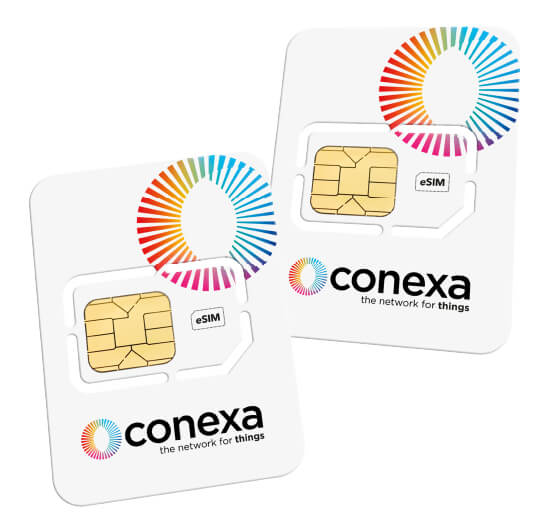
With our own global IoT network, Conexa, over 50 agreements with leading global operators and access into 750+ global networks in 190 countries, our global and local cellular coverage is unrivalled.
We deliver the benefits from multiple networks all under one simple service agreement, all designed around you.
Start your free trial
Whether you are starting a new product development or already have a scaled deployment, our IoT SIM will add value. It provides simple, reliable and flexible connectivity.
- Data packages from 100MB to 1GB+
- Selection of coverage options
- Single SIM supports 4G LTE, LTE-M, NB-IoT and 5G
- Access to SIMPro connectivity management platform.

IoT connectivity management
A single dashboard to streamline IoT operations across your entire IoT estate and any network.
- Simplified cloud-based IoT management
- Full interoperability
- End-to-end security
- Visibility and troubleshooting
- Cost control
- Future-proof & scalable.
Defend
Manage your cyber-attack surface to prevent unauthorised access to devices, cloud infrastructure and data.
Detect
Leverage usage based insights and detailed analysis of device and network behaviour to detect cyber threats.
React
Apply automated counter-measures against problem devices and systems to isolate security breaches and take remedial action.
IoT security
Best of breed security measures used in banking, mobile and IT industries can all be easily applied to IoT.
Our IoT Security Framework will help CISOs, CIOs and System Architects defend, detect and react to cyber-security threats.
IoT hardware
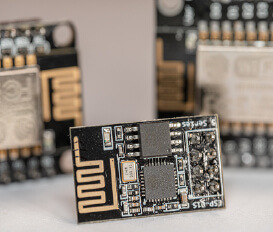
Our eco-system of IoT device and network edge hardware solutions are designed
to optimise time-to-market, operational overheads, security and end-user experience.
Make smart choices
Our specialist teams will fast track you through hardware selection and certification.

Control
Optimise your deployments with connectivity and device management services.

Ease of deployment
Pre-configured, self-install solutions for rapid deployment.

Fully managed
Fully managed installation and services for Global Enterprises.
IoT connectivity solutions for any sector

Our IoT solutions enable precision farming, optimise resources and improve yields through data-driven decisions for smart, sustainable operations.

Our IoT solutions offer remote control, real-time monitoring and automation of wearables, home appliances and digital assets for enhanced convenience and security.
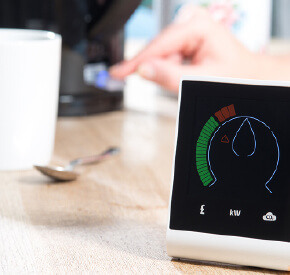
Our IoT solutions enable predictive maintenance, optimise distribution and support smart grids, enhancing reliability and sustainability whilst reducing costs.

Our IoT solutions offer critical data for environmental protection, regulatory compliance and sustainable resource management, fostering a healthier ecosystem.

Our IoT solutions enable real-time patient data, predictive maintenance of smart devices and better treatment outcomes for personalised healthcare.

Our IoT solutions improve efficiency, reduce downtime and enhance quality control, transforming operations into smart manufacturing processes.

Our IoT solutions optimise supply chains, reduce costs and improve delivery accuracy for better reliability and customer satisfaction.

Improve service delivery and operational efficiency with smart infrastructure, real-time data and automation for a safer, sustainable community.

Our IoT solutions optimise stock management, support sales strategies and provide a seamless, personalised shopping experiences.
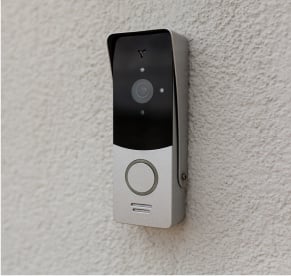
Our IoT solutions offer comprehensive coverage, improve incident response and enable proactive threat detection, protecting people and assets.

Our IoT solutions optimise energy use, enhance occupant experience and reduce costs for sustainable, intelligent building environments.

Our IoT solutions enable local authorities to improve urban living, through real-time analytics, connected infrastructure and automated services.

Our IoT solutions reduce downtime, improve delivery services and boost customer satisfaction driving innovation and sustainability in transportation.
Frequently asked questions about Multi-Network SIMs
A multi-network SIM is an IoT SIM that connects to several mobile networks instead of being locked to one operator. When the network a device is using is congested, unavailable or under maintenance, the device reselects another available network. That choice of networks is what makes coverage and uptime predictable rather than hopeful.
Single-network SIMs tie a device’s uptime to one operator’s coverage at one address. For a device that will sit in a basement plant room, a rural cabinet or a lift shaft for the next ten years, that is a bet placed before anyone has stood at the site with a signal meter.
Wireless Logic’s Local Multi Network SIM gives devices access to multiple mobile networks in each key country of deployment, across 4G LTE, 5G, LTE-M and NB-IoT, managed from a single dashboard in SIMPro.
A multi-network SIM works by holding credentials that more than one mobile network will accept. At power-on the device scans for available networks and attaches to one. Traffic is authenticated through the connectivity provider’s core network. If that network degrades or drops, the device reselects an alternative and reattaches, with no change at the device.
There are three mechanisms behind that, and they are often combined:
-
Roaming agreements: The SIM’s home network holds agreements with several operators in the country, so the device is permitted on any of them.
-
Multi-IMSI: The SIM carries more than one operator identity and presents whichever one suits the network available.
-
eUICC and remote SIM provisioning: A whole new operator profile is written to the SIM over-the-air, long after the device was installed. Under the GSMA’s SGP.32 standard this is now practical for constrained IoT devices without a user interface.
Wireless Logic routes multi-network traffic through Conexa, its own GSMA-certified mobile core built for IoT.
On-SIM and in-network intelligence can detect an outage and move the device to an alternative network path before anyone has raised a ticket.
The benefits of a multi-network SIM for IoT are higher first-time connect rates at installation, fewer site visits, resilience when a single network fails, and one SIM SKU instead of one per operator. Together these cut the cost of running a deployment far more than they add to the cost of the SIM.
-
Devices connect first time. The installer is on site once. A device that can choose its network finds signal at that address rather than discovering that this particular operator does not reach that particular cabinet.
-
Fewer trucks roll. Network problems that would have meant a physical SIM swap are handled over-the-air instead. On a fleet of thousands of devices, this is usually where the business case is won.
-
Outages stop being outages. Local maintenance or a regional operator failure moves devices to an alternative network path instead of taking the service down.
-
One SKU, less logistics. No pairing each device with location-specific connectivity, no operator-specific stock, no site surveys to decide which SIM goes where.
-
Lower total cost of ownership. The SIM costs a little more. The deployment costs considerably less.
Yes. One SIM can connect to multiple mobile networks, and IoT SIMs routinely do. The SIM holds credentials that several operators will accept, so the device attaches to whichever network is available and performing at its location, and moves to another if that one fails. This is standard practice in managed IoT connectivity.
What varies between providers is how many networks are available in a given country, and whether the device is free to choose. An unsteered SIM lets the device pick the strongest network. A steered SIM pushes it towards a preferred operator first, which is cheaper for the provider and slower for the device when that operator is the weak one at that site. Ask which you are buying.
Yes, but the right product depends on where the devices go. A local multi-network SIM gives a device several networks in each of its target countries.
A global IoT eSIM gives it access to networks in almost every country —750+ networks across 190 countries in Wireless Logic’s case.
Devices that cross borders need the second. One constraint catches most international deployments out. Permanent roaming is restricted or prohibited in many countries, including Brazil, Turkey, India and China. A device is allowed to roam on a foreign network for a limited period, not indefinitely. When a SIM is permanently installed in a device abroad, roaming eventually stops being a legal option.
Yes — critical IoT is what multi-network SIMs are built for. Any application where a connectivity failure has safety, revenue or compliance consequences should not depend on a single mobile network. Multi-network access removes that single point of failure, so a device stays reachable through a network outage, local maintenance or a coverage gap. Critical IoT applications where this is the norm:
-
Security and life safety — alarm signalling, CCTV, lone-worker devices, telecare
-
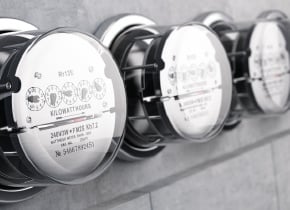
Energy and utilities — smart metering, grid monitoring, EV charge points
-
Healthcare — connected medical devices and remote patient monitoring
-
Payments — card terminals and unattended retail
-
Transport — fleet telematics and connected infrastructure
What to check beyond the SIM, because the SIM alone is not resilience: the provider’s core network and its uptime commitment, whether support is 24/7, whether outages are detected proactively or reported by your customers, and what the security model covers.
Multi-network IoT SIMs in the UK are offered by specialist IoT connectivity providers and by mobile operators’ business divisions. Specialist providers — including Wireless Logic, Eseye and Onomondo give devices access to several UK mobile networks on one SIM, with a management platform, SLAs and global coverage options.
What to compare between providers
-
How many UK networks the SIM can use, and whether roaming is steered or unsteered
-
Whether the provider runs its own mobile core, or resells another’s
-
Whether the same SIM extends internationally, and how permanent roaming is handled
-
What the connectivity management platform lets you do without raising a ticket
-
Support hours, SLAs and how outages are detected
-
Whether contracts and pricing suit your volumes and device lifetime
Wireless Logic is a UK-headquartered IoT connectivity provider, founded in 1999 and based in Reading, England.
It manages over 20 million connected devices across 170 countries for 25,000 customers, and offers multi-network SIMs in the UK and every key market over 4G LTE, 5G, LTE-M and NB-IoT, on its own GSMA-certified core network, Conexa.
