
Each year, healthcare’s leaders and providers converge on Amsterdam for HLTH Europe, the industry’s number one innovation event. They will see digital solutions that promise to improve care, ease pressure on services and support patients outside hospital. But as they add IoT connected devices to their digital infrastructures, will they be adding to the issues that keep security and risk officers up at night?
As healthcare becomes ever more reliant on the IoT, it must deepen its understanding of security risks and commit to the most stringent prevention and detection measures.
Top 3 takeaways on IoT security in healthcare
- The IoT connects healthcare devices and wearable for remote monitoring, bedside testing, relaying ambulance data and cold chain monitoring
- Connected devices provide potential attack surfaces. If compromised, they can go offline disrupting care delivery and jeopardising outcomes
- Healthcare must secure its IoT devices diligently and avoid security exposures such as unsecured Wi-Fi and defence without detection.
How is IoT use growing in healthcare?
From always-on monitoring to wearables that track patients’ vital signs at home, the volume of connected devices in clinical and community settings is growing rapidly.
Globally, the IoT in healthcare market is expected to grow from over $65 billion in 2025 to around $425 billion by 2035, a compound annual growth rate (CAGR) of over 18% (2026-2035). Europe is a 29% share of the global market, making it the largest outside North America.
What is the IoT used for in healthcare?
The IoT’s impact in healthcare is accelerating through:
Remote monitoring
Remote monitoring tracks conditions such as diabetes, sleep apnoea and chronic obstructive pulmonary disease, and checks that patients have taken medication when they should. This remote care alleviates pressures on in-demand healthcare appointments, supports independent living and helps keep patients out of hospital.
Bedside testing
The IoT can also improve efficiency to shorten care journeys. Bedside tests, with automatic results that populate medical records, reduce manual data entry and therefore the time patients must wait for treatment to start or to be discharged.
Wearables
Wearables and other personalised care devices can monitor and track health metrics such as breathing patterns, heart rhythms and blood glucose levels to detect common conditions early.
Connected ambulances
When ambulances relay critical health data back to destination hospitals, clinicians are better informed and can therefore be better prepared when patients arrive.
Pharma supply chains
Pharmaceutical organisations rely on secure and resilient connectivity to maintain product quality, ensure regulatory compliance and optimise supply chain operations in real-time.
What are the main IoT security risks in healthcare?
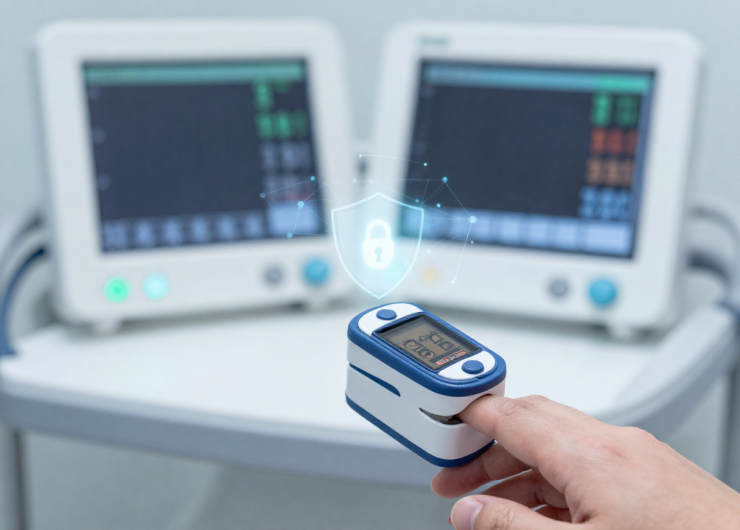
IoT devices are assets to patients, clinicians and healthcare professionals but each represents a potential attack surface.
A security failing can have serious consequences. For starters, it can take devices that patients and healthcare providers rely on offline, disrupting care delivery and jeopardising outcomes.
The data healthcare devices exchange must be kept private and secure, so breaches threaten patient confidentiality. They also leave organisations vulnerable to ransom demands, regulatory penalties and loss of public trust.
Digital security failings can disrupt services and interrupt care delivery as organisations scramble to isolate breaches, get offline devices and systems back up and running, identify causes and put fixes in place. At their worst, security breaches can put patients at risk.

What IoT security exposures put healthcare organisations at risk?
In Wireless Logic research with Kaleido Intelligence 90% of healthcare respondents reported pain points around cybersecurity threats and compliance challenges. These pain points must be alleviated by making solutions secure by design and not vulnerable to:
- Unsecured Wi-Fi: why patient-side networks create uncontrollable risk
- Regulatory non-compliance: how NIS2 and the Cyver Resilience Act raise the stakes
- Bolted-on security: why afterthought protection leaves devices exposed
- Defence without detection: why blocking threats isn't enough
Cellular IoT connects devices without running wires to retrofit facilities and provide services in the home. Healthcare providers cannot rely on patient-side infrastructure as it is outside their control and could introduce security risks.
Against a tightening regulatory backdrop, including the Cyber Resilience Act and NIS2, security has become a condition of market access.
Too often, security is an afterthought or vulnerabilities are addressed only after solutions have been deployed. Security must be built in from the start and take a 360-degree approach.
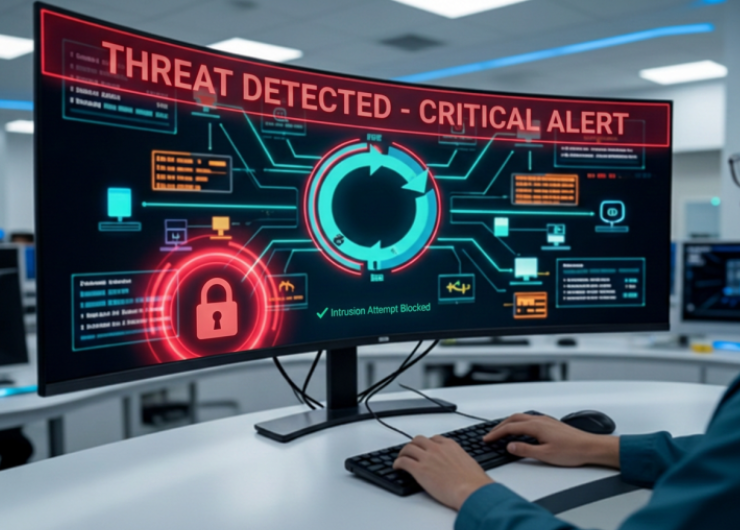
IoT security must defend against cyber threats but also detect any irregularities that may indicate a breach. Anomaly and threat detection analyses network behaviour to identify threats so security teams can uncover previously invisible risk and react more swiftly.
How should healthcare organisation approach IoT security?
The more healthcare organisations rely on connected devices and real-time data, the greater their need for secure, resilient systems they can see, trust and manage.
An IoT security framework provides a model to assess security against covering technology capabilities, standards and best practices to strengthen identity and authentication policies and defend, detect and react to cyber threats.
Discover Wireless Logic for IoT healthcare
Visit Wireless Logic at HLTH Europe, booth E50, to chat with our experts about your IoT healthcare needs and hear about our security portfolio including anomaly and threat detection.
At the booth, you can see a demonstration of a digital twin for healthcare, one of the most powerful tools in the sector’s digital transformation. This demo will showcase how real time data can improve operational safety across hospitals and assisted living environments, collating data to provide a single, connected view from infection control indicators like gel dispensers, to environment factors affecting both patients and staff.