SIM cards are essential for a number of industries, including transport and logistics.
What is an IoT SIM card?
An IoT SIM card is a SIM used to give devices connectivity, enabling them to become part of the Internet of Things. Physically, it is usually the same as a standard SIM, but it is provisioned and managed differently.
IoT SIMs are designed for long-term deployments, large numbers of devices, and secure data connectivity. They often support features such as remote management, flexible data plans, and global or multi-network coverage.
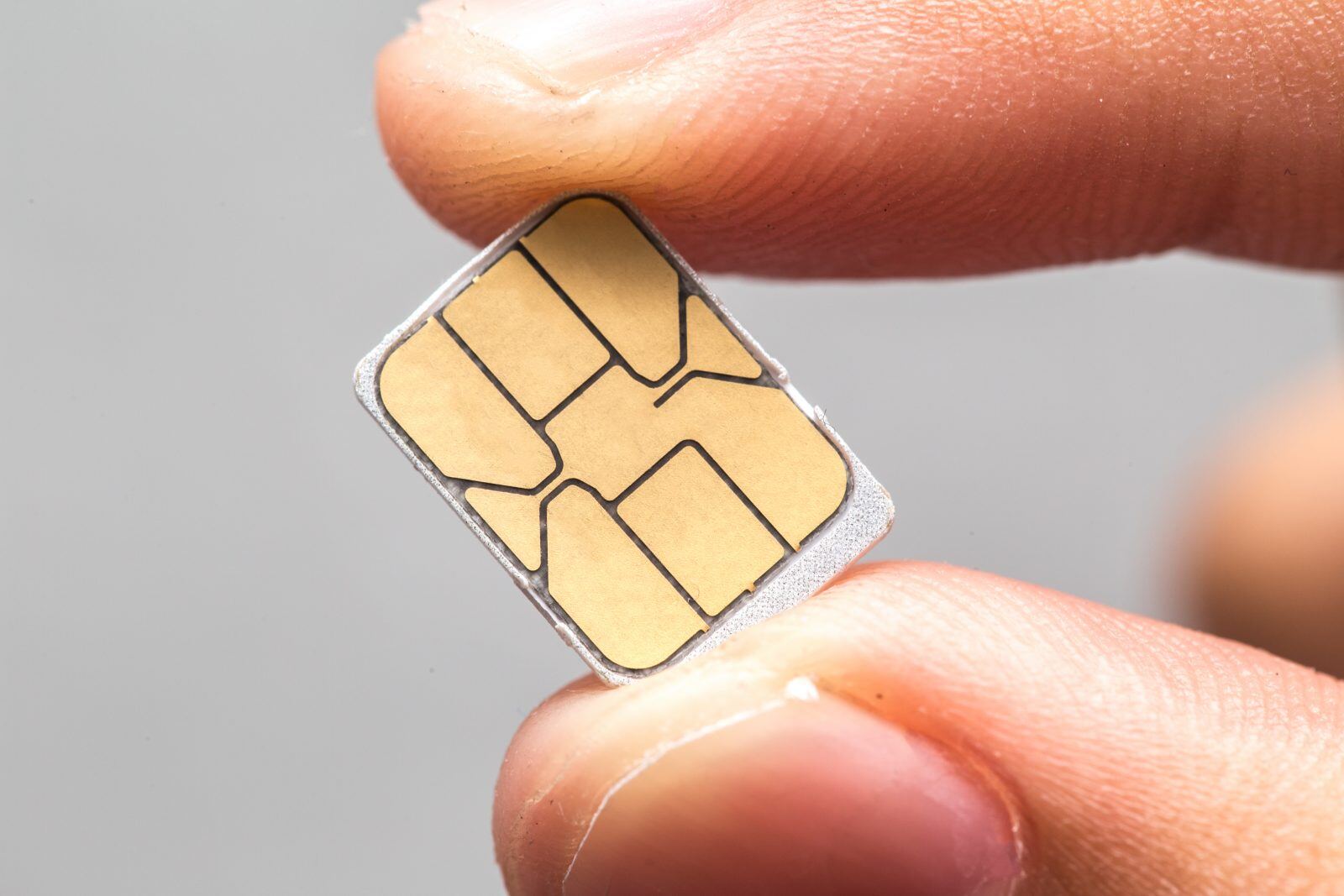
In its familiar card format, a SIM (subscriber identity module) consists of a contact chip encased in protective plastic. This chip contains a device’s authentication credentials, enabling the device to access a cellular network.
For business users, IoT SIM cards perform additional useful roles, making it easier to monitor and configure devices, and manage your IoT projects remotely.
Smartphone SIM cards vs. IoT SIM cards
Smartphone SIM cards vs. IoT SIM cards
A smartphone SIM card is essentially an authentication tool: it contains key device information to enable the user to connect with the network.
An IoT SIM card performs this basic connectivity task, but it is deployed as part of a managed service. This Connectivity Management service allows you to manage and configure your IoT device connections remotely. It allows you to monitor connection status and data usage. For instance, you might need to temporarily disable connections on some devices at certain times, for security or cost reasons.
Unlike most phone SIM cards, a single IoT SIM can enable access to multiple networks. This helps ensure maximum coverage and a more resilient connection.
Dynamic vs fixed IP SIM cards
Consumer devices usually use dynamic IP addresses: i.e. the address changes every time the device connects to the internet (this helps preserve the consumer’s privacy).
In an IoT system however, dynamic addresses can make it more difficult to keep track of devices. This is why – i.e. addresses that never change – may be preferable for IoT usage. The optimal set-up should give you visibility over your devices, along with suitable data encryption to ensure end-to-end security.
Private IP addresses also provide a layer of protection against malicious internet attacks.
Industrial and automotive IoT SIM cards
Industrial IoT SIM cards are designed to be resistant to temperature extremes, vibration and corrosion. This durability makes them suitable for heavy duty applications such as plant temperature sensors and production line monitoring equipment. Likewise, automotive SIMs are made to withstand all weathers, vibrations and motion, for use on fleet vehicles.
SIM card form factors
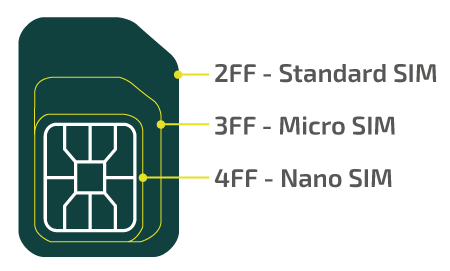
In terms of size, these are the main categories of removable SIM:
Mini-SIM (2FF) (25mm x 15mm). Typically seen in larger and fixed-location devices such as refrigeration units and payment points.
Micro-SIM (3FF) (15mm x 12mm). Used most often in portable devices such as hand-held trackers, tablets and monitoring equipment.
Nano-SIM (4FF) (12.3mm x 8.8mm). A popular form factor for wearables.
How do SIM cards work?
A SIM card contains the information necessary for devices to connect to cellular networks. In simple terms, when a device needs to make a connection, the cellular module (modem) starts by looking for networks. Once a network is found, the module sends certain code numbers (see below) stored within the SIM to the network tower. The network then checks whether the device is authorised to connect. If so, it gives the device network access.
What information is stored on SIM cards?
The authentication credentials stored on both regular and IoT SIMs are as follows:
ICCID (integrated circuit card identifier). This is the unique identifier allocated to each SIM.
Authentication Key (Ki). This unique authentication key is used to verify whether the device is authorised to access the network.
Location Area Identity (LAI). Consisting of a mobile country code (MCC), mobile network code (MNC) and location area code (LAC), the LAI allows the network to identify the location of the SIM card.
IoT SIM use cases
IoT SIM cards can be applied across multiple industry segments to solve specific business challenges. Below are some examples of sectors using IoT SIMs and the application they are enabling.
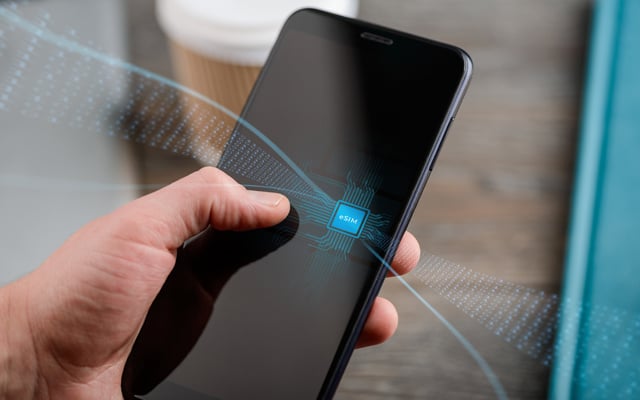
With an eSIM, “e” stands for embedded. Instead of being incorporated into a removable plastic card, the eSIM is embedded into the device’s circuitry.
The meaning of eSIM has evolved slightly since its inception and can mean one of two things.
Embedded SIM is a chip SIM where the SIM function is embedded into a silicon chip and mounted onto the electronic circuit boards inside the device’s circuitry. The MFF2 format is the most common with dimensions of 6mm x 5mm. This small footprint combined with the more secure and reliable method of embedding the chip SIM into the electronics makes for a more secure and reliable solution. This makes it more difficult to update later of course.
An eSIM (also called eUICC) is a reprogrammable SIM which allows the SIM profiles to be reprovisioned or updated over-the-air. These OTA functions are enabled by an updated SIM operating system (OS) and additional secure memory on the eSIM or eUICC which allows multiple SIM profiles to be stored, updated and managed OTA.
Note that all the SIM form factors (the card formats as well as the MFF2 chip format) mentioned here can be provided as an eSIM.
Initially an eSIM is provisioned with a “bootstrap” or primary profile which enables the device to connect to a range of MNO networks when being tested or when first deployed.
The remote provisioning ability of eSIM provides a degree of insurance in that it allows the bootstrap profile to be replaced by another MNO profile to take advantage of new commercials or to address network performance issues with the original MNO. This might happen only once during a device lifetime or perhaps never at all.
eSIM also supports global deployments where a range of regulatory (e.g. permanent roaming restrictions) or regional cost variations will be encountered.
In these cases, it is possible to update the eSIM with localised profiles which turn a roaming SIM into a local non-roaming SIM and/or allow a switch to local tariffs. The latter is beneficial for high data applications.
Remote SIM provisioning of this nature means that no physical swapping of SIM cards is required, which means less hassle and lower reconfiguration costs.
eSIMs are also designed to last for the lifetime of the device, which again helps to ensure lower maintenance costs.