
If you haven’t considered eSIM for your IoT solution, or dismissed it in the past, look again. The latest standard (SGP.32) makes eSIM better suited for the IoT than it was before, and the technology offers total cost of ownership (TCO) and resilience benefits for more reliable and scalable IoT in the long-term.
Top 3 takeaways on IoT eSIM resilience and cost-effectiveness
-
eSIM shifts the cellular connectvity landscape. A standard SIM fixes connectivity to a specific network, but eSIM can store and deploy SIM network profiles that can be reprogrammed through remote SIM provisioning (RSP)
- eSIM helps with IoT resilience by enabling remote network switching
- eSIM helps with IoT total cost of ownership (TCO) through remote SIM provisioning (RSP) and by streamlining manufacturing and inventory.
Is eSIM a good option for the IoT?
The IoT is complex; it has many component parts - hardware, software, connectivity, data management and so on.
To design and develop your IoT solution, you and your IoT solutions provider will need clear requirements to choose connectivity, technology, commercial arrangements and more.
To date, those choices haven’t tended to include eSIM. The technology hasn’t been readily adopted by many sectors for the IoT because the standards it worked to (SGP.02 and SGP.22) weren’t ideal for managing profiles across IoT device estates.
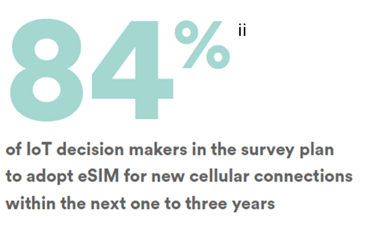
That is changing. SGP.32, the latest eSIM standard for remote SIM provisioning (RSP), is designed specifically for the IoT and is expected to spark an uplift in the eSIM market[i]. Unsurprising then, that a significant 84% of IoT decision makers in a Beecham Research survey[ii] plan to adopt eSIM for new cellular connections within the next one to three years.
Discover all you need to know about eSIM and the new standard in the SGP.32 buyer’s guide
What are the benefits of eSIM in IoT?
eSIM shifts the landscape of cellular connectivity. A standard SIM card fixes connectivity to a specific network. To change this, the card must be physically accessed and swapped out.
An eSIM can store and deploy SIM network profiles that can be reprogrammed over the air (OTA). This makes it a flexible option. You could change network remotely to obtain better commercial terms or improve service availability.
IoT products and solutions must conform to the regulations and legislation that apply where they are. That makes international, or global, deployments particularly complex. You can’t have a connectivity plan with one network to connect all your devices around the world. Not if they’re intended to be in position for any length of time. Permanent roaming simply won’t allow it.
Then there are data sovereignty issues. Where is your data collected? Processed? Transferred to? Analysed? Rules govern that too. You may not be able to manage all data across all the regions where you have devices, in the same way.
eSIM helps with these international considerations. It gives you the capability of a fleet of programmed SIM cards, in one SIM type. Each applicable network, with its corresponding commercial and compliance criteria, can be activated when the product is in situ and updated remotely if conditions change.
Little wonder then, that Beecham Research foundii multi-network connection and management, remote device activation and monitoring and easier deployment rated the leading benefits of eSIM, compared with a standard SIM.
eSIM can help with IoT resilience
Nobody wants IoT downtime. It can happen for many reasons, such as a mechanical fault, power or network outage, physical damage to a device or a cyberattack.
Anything that helps make an IoT device or solution more resilient is valuable and can reduce the risk of downtime.
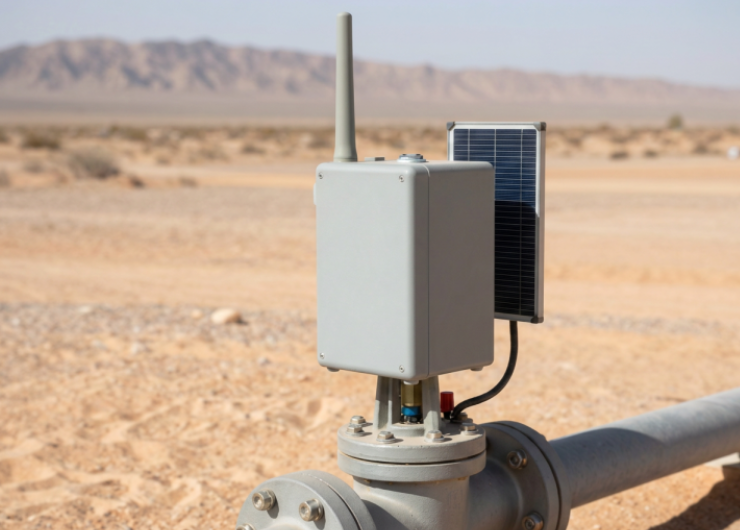
eSIM helps with IoT resilience by enabling remote network switching. If you need to change network to improve availability, it is faster to make that change remotely, which reduces the risk of ongoing service interruptions.
The same goes for changing network for compliance reasons. If you need to switch, you can do so without sending engineers to attend devices.
Neither conditions nor circumstances stand still. Technology doesn’t either, for that matter. Anything that adds flexibility to IoT solutions improves resilience. The more you can adapt, and make changes quickly, the less likely you will be to suffer disruption.
Resilient solutions scale more readily too. The barriers to international mobile connectivity we’ve already explored can hold businesses back from expanding into new markets. eSIM can facilitate faster go-to-market through region-appropriate devices.

How does eSIM lower costs in IoT?
eSIM helps with IoT total cost of ownership (TCO) through RSP and by streamlining manufacturing and inventory.
With eSIM, you don’t need to assign specific consignments to particular regions, as you do when each device contains a SIM programmed to the relevant local network where it is going. Each of your IoT devices can be the same—same eSIM—activated to connect to the local network when it arrives.
That means fewer stock keeping units (SKUs) to inventory-manage, which is far more cost-effective. Managing multiple SKUs to meet regional or other requirements is purported to increase inventory carrying costs by 20-30% annually[iii]. It also adds to TCO through more complicated testing, certification and support.
Whatever the reason why you might need to switch network, RSP reduces the need to make site visits to do so. That is a considerable cost benefit, particularly when devices are geographically spread, or located in hard-to-access areas.
What makes Wireless Logic eSIM different?
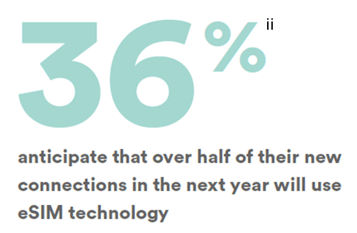
Over a third of respondents to Beecham Research’s surveyii anticipate more than half their new connections in the next year will use eSIM, so now could be the ideal time for you to look again at what the technology has to offer.
Wireless Logic’s eSIM for IoT enables RSP and supports 4G, LTE-M, NB-IoT and 5G alongside the widest range of eSIM profiles in IoT.
Find out more:
-
Enterprise eSIM connectivity for global IoT
-
SGP.32 buyer’s guide: what IoT decision makers should be asking about eSIM
-
How to assess and reduce TCO in IoT
-
Maximising uptime for the IoT: how to achieve high availability and resilience.
And contact us to discuss.
[i] ABI Research – see https://wirelesslogic.com/blog/why-its-time-to-look-again-at-esim-for-the-iot
[ii] Beecham Research SGP.32 buyer’s guide
[iii] NetSuite – see guide to TCO
Check out other blogs

A Complete Guide to IoT Connectivity
Understanding IoT connectivity technology with the right provider helps businesses deploy secure, reliable and scalable connected devices anywhere....

How to choose the right IoT SIM provider for energy and utilities
Choosing an IoT SIM provider for energy and utilities is a long-term decision. Smart meters, EV charging stations and energy infrastructure can...

How to implement eSIM
eSIMs are by no means new but have never fully taken off for the IoT, outside of the automotive sector. However, that is set to change with the new...